
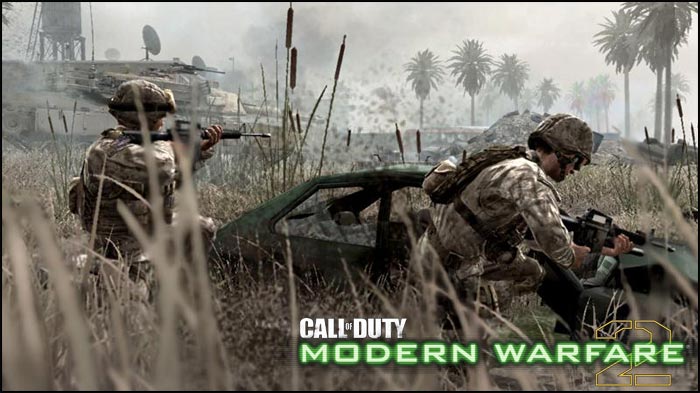
The most popular and most successful game in the popular Call of Duty franchise is Modern Warfare 2, which was released in November 2009. On the opening night, 4.7 million copies of the game were sold, earning $310 million. This launch is often referred to as the most successful launch of all time. A shift in the way people, especially the youth, engage with media occurred as well because of this game. People were spending more time playing this game than any other and were leaving out other forms of media. So, clearly, this game was/is popular. But all of this exposure to violence in a video game can lead one to ask, can violent video games lead to violent behavior?
The textbook says, “Slaughtering people on screen can tear at you.” And that’s true. These games, including Modern Warfare 2, are designed to bring a real-world war experience to the player. An airport mission in the game, called “No Russian,” involves the player making a choice between shooting innocent civilians and walking next to the Russian soldiers as they shoot innocent civilians. Despite the severity and disturbing nature of some of these games, researcher David Waddington said there isn’t a “proven” connection between violent behavior in video games and in real life.
Honestly, what people need to remember, and what has been referenced in this blog before, is to better understand the distinction between fiction and reality. Sure some of the events portrayed in these video games are based on actual events, but unless someone is actually out on the front lines living this life, then there is no reason to let any of the violence in the video game be let out in real life. These things need to be better taught to children as these video games are becoming more accessible at a younger age.
References
Christians, C., Fackler, M., Richardson, K., Kreshel, P., & Woods, R. (2012). Media Ethics: Cases and Moral Reasoning (9th ed.). Boston: Allyn & Bacon.
Violent Video Games. (2014, October 6). Retrieved April 17, 2015.
 MATTHEW E. COHLMIA II